Search
Search publications, people, institutions, and research fields.
Project developed for ANID
We developed this platform so ANID could bring publications, people, institutions, and indicators together and make them searchable in one place.
What it can do
Search publications, people, institutions, and research fields.
Explore co-authorship, institutional links, and disciplinary structures.
Combine indicators and visualizations to study capabilities and trends.
Bring different sources together without losing track of data provenance.
Work completed
To build it, we brought sources together, resolved equivalent records, and developed the queries and visualizations ANID needed.
We integrated publications, authors, institutions, journals, disciplines, and indicators received in different formats.
We built normalization rules and tools to prevent the same person or institution from appearing as several different records.
We developed search tools, profiles, indicators, and networks, along with the processes that update data and prepare reports.
How it is built
Records and indicators from Web of Science, Scopus, SciELO, and InCites, together with ORCID identifiers and data managed by ANID.
Backend and API built with Ruby on Rails 8. The new interface uses Nuxt 4 and Vue 3 while retaining Rails frontend modules that remain in operation.
MySQL is the main database. Sidekiq and Redis run imports, calculations, reports, and scheduled tasks outside the user-facing request cycle.
Sigma, Graphology, ForceAtlas2, D3, and ECharts support exploration of co-authorship, institutions, disciplines, indicators, and other scientific relationships.
The platform in use
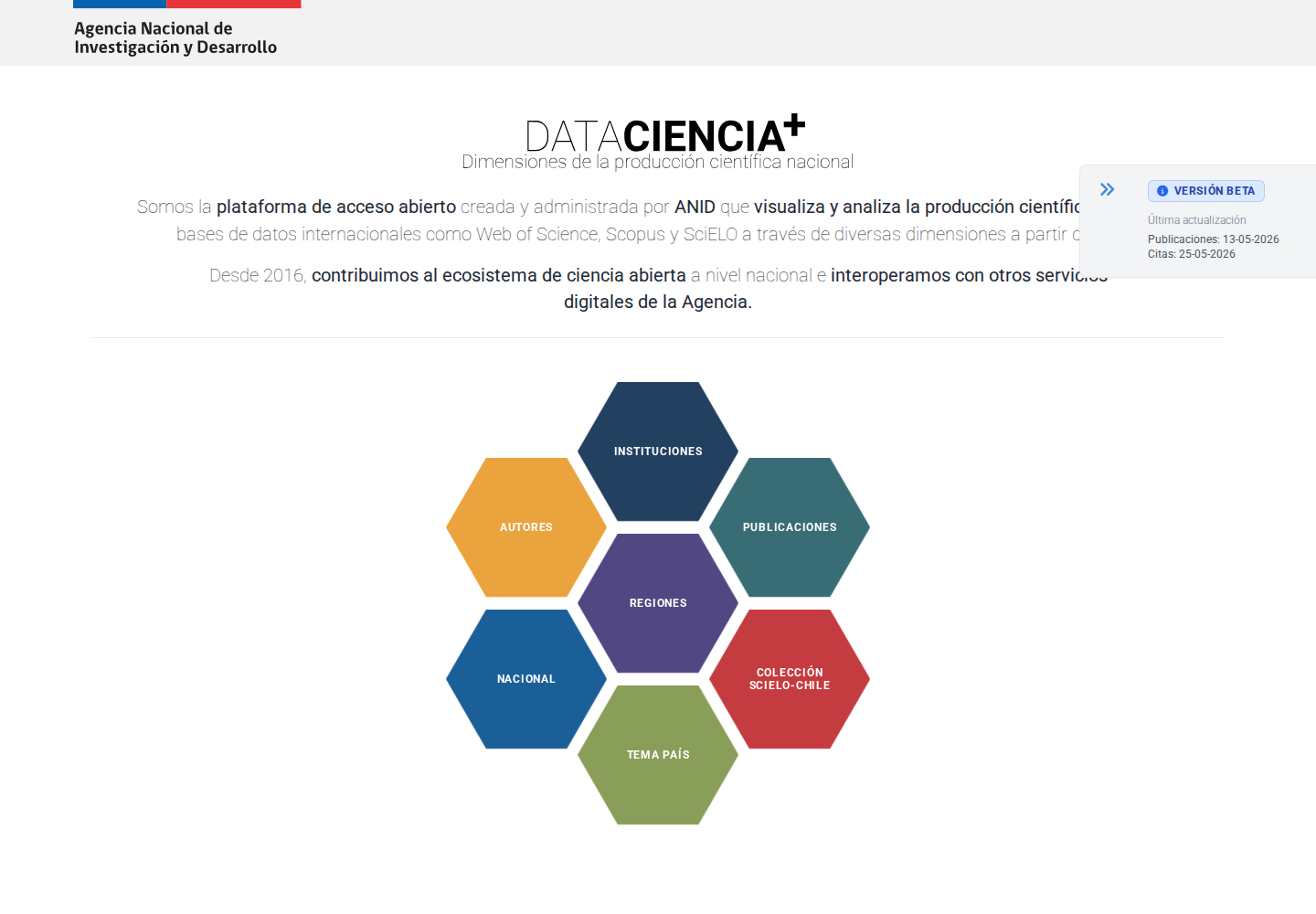
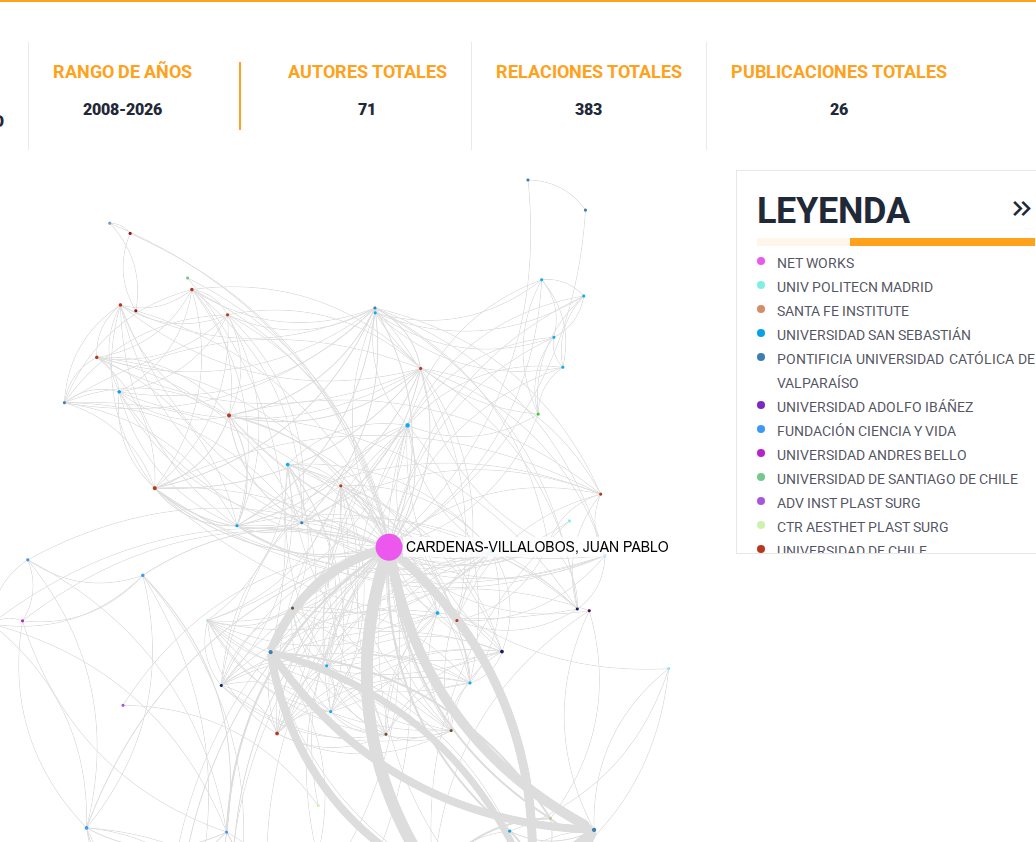
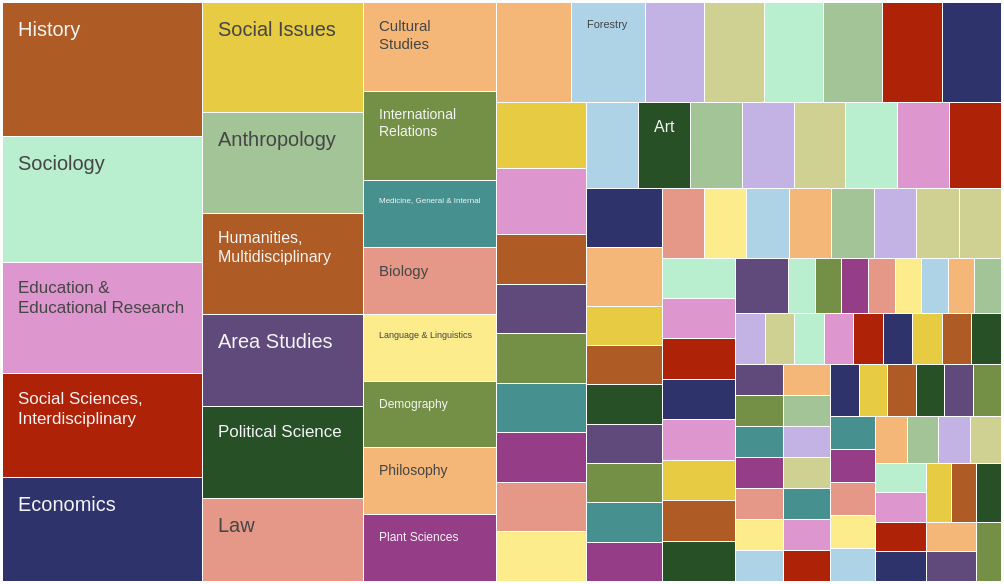
The home page comes from the public site. The other screenshots show a co-authorship network and the distribution of research fields.
What it enables
A person can search for a publication, author, institution, or research field.
ANID teams can review output, collaboration, impact, and the distribution of capabilities.
Networks make it possible to move from a general figure to the relationships that help explain it.
Let's talk
We can help you organize it, connect it, or turn it into a useful tool.
Talk to the team